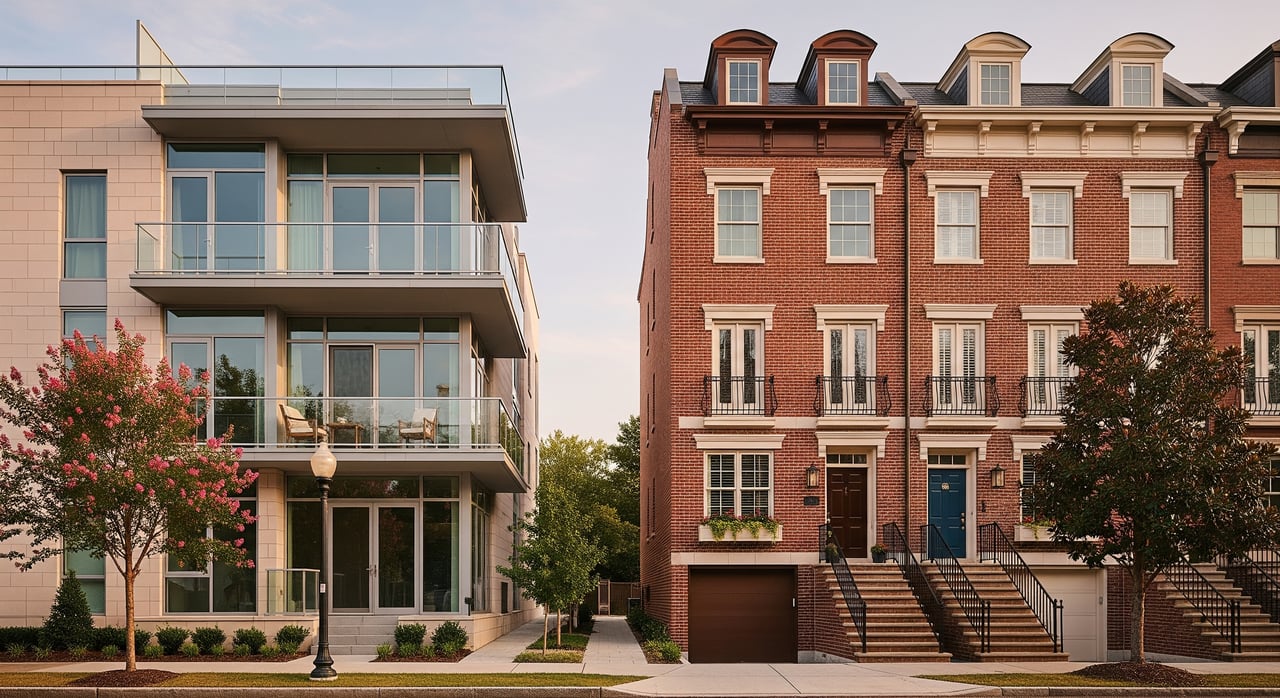
Are you trying to decide between a condo or a townhome near Willow Lawn? You are not alone. Many first-time buyers and downsizers want a low-maintenance home with great access to shopping, dining, and quick commutes. In this guide, you will learn the real differences that affect your budget, financing, maintenance, and resale. Let’s dive in.
Condo vs townhome basics near Willow Lawn
What condo ownership means
With a condo, you typically own the interior of your unit and share ownership of common areas like hallways, the roof, landscaping, and amenities. A condominium association manages those shared elements, and you pay a monthly fee that supports maintenance, insurance for common areas, and reserves for future repairs. Rules and responsibilities live in recorded condominium documents that control how the community runs.
What townhome ownership can mean
A townhome describes the style of the home, not the legal structure. Some townhomes are fee-simple, which means you own the home and the land under it. Others sit within a condominium or planned community regime, which can work more like a condo for financing and maintenance. In fee-simple setups, you often handle more exterior upkeep and carry different insurance.
Why the legal structure matters
Two nearby townhomes can have very different rules and costs. The recorded documents determine who fixes the roof, who pays for the yard, and how your lender will underwrite the loan. When you shop near Willow Lawn or the West End, ask your agent to confirm the legal structure early so you know how maintenance, insurance, and financing will work.
Monthly costs to compare
HOA and condo fees
Monthly fees vary widely based on age, amenities, and services. In markets like Richmond, they can range from under 200 dollars per month for minimal services to several hundred dollars when amenities are robust. What matters most is what the fee covers. Look for line items such as:
- Exterior maintenance and roofing
- Common-area insurance on a master policy
- Landscaping, snow removal, and trash
- Water and sewer in some communities
- Amenities like a pool or fitness room
- Reserve fund contributions for big future repairs
Always request the current budget, recent financial statements, a reserve study, board meeting minutes, and the insurance certificate before you make a decision. These documents reveal whether the fee is well spent and whether reserves are on track.
Insurance and taxes
Your insurance type depends on the structure. Condo owners usually carry an HO-6 policy that covers the interior and personal liability. Townhome owners may need an HO-3 policy if they own the structure and land, or an HO-6 if a master policy covers more of the building. Ask exactly what the master policy covers. On taxes, the locality assesses property based on the recorded ownership. Your agent can help you confirm the assessment method for a specific address.
Utilities and special assessments
Many condos include some utilities like water in the monthly fee. Fee-simple townhomes often have separate meters for all utilities. Also check for special assessments. A special assessment is a one-time charge for capital projects when reserves are not enough. Confirm whether a recent reserve study exists and whether any large repairs are planned.
Financing differences to plan for
Why condos can be harder to finance
Condos must meet project eligibility standards for many loan programs. FHA, VA, and conventional lenders review factors like owner-occupancy rates, insurance, financial strength, and any litigation. If the project is not approved or does not qualify, your loan options can shrink and rates or down payment requirements may be higher. Older or smaller complexes near Willow Lawn can be more sensitive to these rules, especially if there is a high share of rented units.
Townhome financing at a glance
Fee-simple townhomes are often underwritten like single-family homes with no project approval, which can simplify FHA, VA, and conventional financing. If the townhome is part of a condo or planned community regime, lenders may still review the project. No matter what you buy, lenders include HOA or condo dues in your debt-to-income ratio.
Steps to protect your financing
- Ask your lender to check condo project eligibility before you write an offer.
- Get a full pre-approval and confirm how dues and any assessments will be treated.
- If you need FHA or VA, confirm whether the project is approved or whether a single-unit pathway is possible.
- Include a contingency that allows you to cancel if the project does not meet your lender’s requirements.
Maintenance and lifestyle fit
What daily upkeep looks like
Condos typically offer the lowest day-to-day maintenance. The association handles exterior work and common areas, which frees up your weekends. Townhomes can feel more like a traditional home with a private entrance, driveway or garage, and sometimes a small yard. Maintenance can be light or more hands-on depending on whether you own the exterior and the land.
Privacy, parking, and outdoor space
Townhomes often provide more separation and outdoor space than a mid-rise condo building. Many offer direct garage access or private patios. Condos can deliver amenities and on-site services that townhomes do not. Parking and guest policies vary by community, so review the rules and confirm any assigned or deeded spaces.
Accessibility for downsizers
If single-level living or elevator access matters, condos can be a strong fit. Many condo buildings offer one-floor plans and accessible entries. Townhomes usually have stairs, although some include main-level bedrooms or a garage-level entry that reduces steps. Decide what will work for you long term.
Resale factors in the West End
Buyer pools and demand near Willow Lawn
The Willow Lawn and Carytown areas offer walkable retail, dining, and quick access to downtown and major employers. Those features support steady interest for both condos and townhomes. Condos often attract buyers who want low maintenance and convenience. Townhomes tend to draw buyers who value a private entry, garage, or a bit of outdoor space.
HOA health and investor ratios
Resale strength often tracks with an association’s financial health. Strong reserves, clear rules, and a balanced mix of owner-occupants can help financing and future demand. High investor shares can limit loan options for future buyers and may affect pricing. Always review rental caps, short-term rental policies, and owner-occupancy data before you buy.
Quick due diligence checklist
Use this short list as you tour homes and prepare offers.
- Confirm legal structure: fee-simple townhome or condo regime.
- Ask for HOA documents: declaration, bylaws, CC&Rs, rules and regulations.
- Review finances: current budget, bank statements, last 2 to 3 years of financials, reserve study, and insurance certificate.
- Check projects: planned capital repairs, recent special assessments, and board meeting minutes from the last 12 to 24 months.
- Verify occupancy: owner-occupancy ratio, investor share, and any short-term rental use.
- Clarify maintenance: who handles the roof, exterior walls, driveway, sidewalks, and yard.
- Confirm parking: assigned spaces, guest policies, and any fees.
- Align financing: FHA, VA, or conventional project status, and treatment of dues in underwriting.
- Order inspections: full home inspection, plus specialists for older systems if needed.
Tips for first-time buyers
- Price the full monthly cost, not just the mortgage. Include HOA or condo fees, insurance type, and likely utility costs.
- If you rely on FHA or VA, have your lender check condo project approval before you fall in love with a unit.
- Review rules that affect daily life such as pet policies, renovation limits, and rental rules.
- Ask about reserves and major projects to avoid surprise assessments.
Tips for downsizers
- Choose a layout that supports aging in place, such as single-level living or elevator access.
- Confirm what the master insurance covers, then get a quote for your HO-6 or HO-3 policy.
- Compare monthly dues to the cost of yard care, roof replacement, and exterior upkeep in a fee-simple townhome.
- Evaluate parking convenience and guest access for visitors.
How we help near Willow Lawn
You deserve clear answers and a smooth purchase. As a local, full-service team, we help you verify the legal structure, review HOA health, coordinate lender project checks, and compare total monthly costs. If you are selling a home to make this move, our low fixed listing fee can keep more equity in your pocket. Buyers can also ask about our cash-back options and Heroes rebates.
Have questions about a specific building or townhome community near Willow Lawn or Carytown? Let us request the documents, line up inspections, and guide you through financing and insurance choices. When you are ready, connect with Adam Tuck to map out your next step with confidence.
FAQs
What is the core difference between a condo and a townhome near Willow Lawn?
- A condo typically gives you ownership of the interior plus shared common areas, while a townhome is a housing style that may be fee-simple or part of a condo regime, which changes maintenance, insurance, and financing.
How do HOA or condo fees affect my monthly budget?
- Fees cover services like exterior maintenance, insurance on common areas, and reserves, and they are counted in your debt-to-income ratio, so they change affordability and loan approval.
Can I use FHA or VA financing for a condo in Richmond’s West End?
- Yes, if the condominium project meets FHA or VA eligibility; if not, your options may be limited, so ask your lender to check project status early.
How can I tell if a townhome is fee-simple or part of a condo regime?
- Your agent can review the recorded documents and the deed; fee-simple ownership typically includes the structure and land, while a condo regime will have association-controlled common elements.
What documents should I review before making an offer?
- Request the declaration, bylaws, CC&Rs, rules, current budget, recent financials, reserve study, insurance certificate, board minutes, and details on any planned projects or assessments.
What insurance do I need for a condo or townhome?
- Condo buyers usually carry an HO-6 policy for interiors and liability; fee-simple townhome owners often need an HO-3 policy that covers the structure and land, but confirm master policy coverage first.