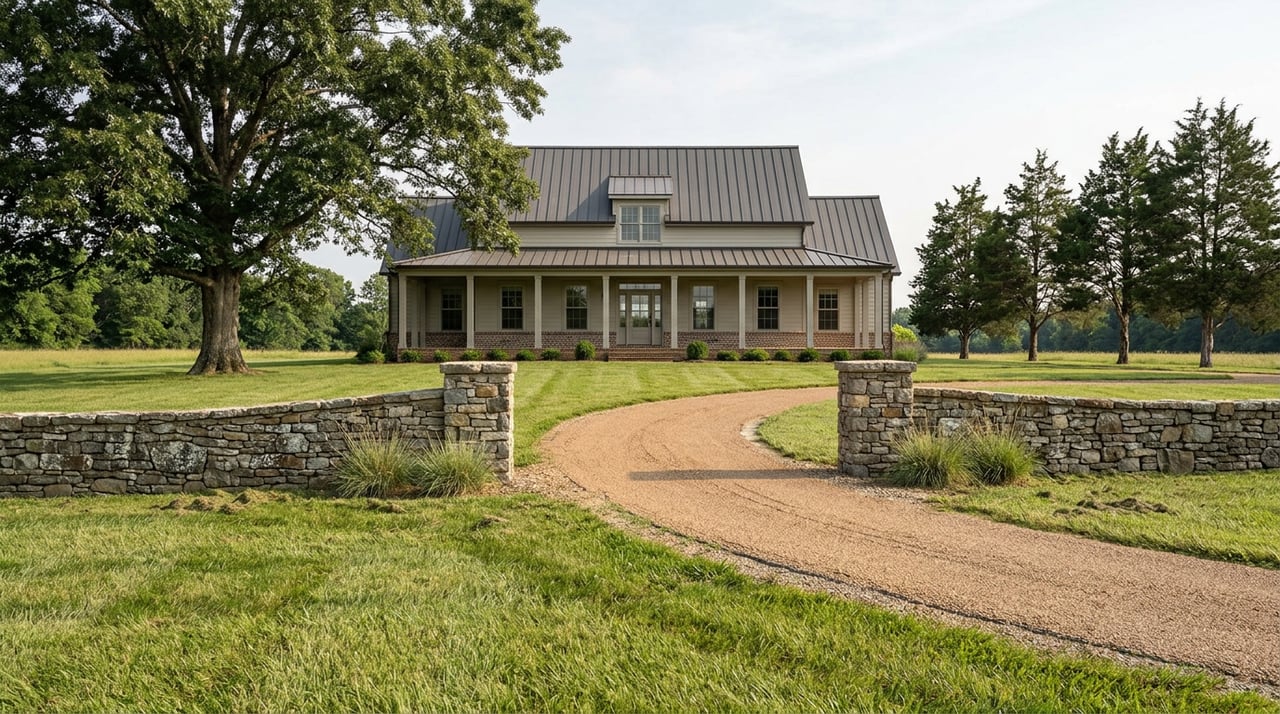
You're looking at a ten-acre parcel outside Manakin-Sabot with a farmhouse set back behind a stand of oaks, a board-fenced pasture, maybe a horse or two grazing near the tree line. The listing sheet shows an annual property tax bill that looks almost too good for the acreage. Compare it to a similar-sized parcel two miles away with no visible pasture, and that second one's tax bill runs several multiples higher.
The difference isn't the land. It's a status the county assigns to the land, and that status doesn't automatically transfer with the deed the way a roof or a well does.
Two Tax Bills for the Same Ten Acres
Goochland County, where most of Manakin-Sabot sits, has run a Land Use Taxation program since 1978. Under it, land that qualifies as agricultural, horticultural, or forestal gets assessed at its use value rather than its fair market value. The county's real estate tax rate itself has held steady at $0.53 per $100 of assessed value since 2008, so the rate isn't what moves. What moves is the number the rate gets applied to. A parcel taxed on use value instead of market value can carry a tax bill that looks like it belongs to a much smaller piece of land.
That's the number a buyer sees on the listing. What the listing doesn't say is that the number is conditional, not permanent. It was earned by an active use, and it has to be re-earned every year.
What Actually Qualifies (and What Doesn't)
The county reviews applications through the Assessor's Office, due each year by November 1, and the qualifying categories have specific thresholds:
- Agricultural or horticultural use requires a minimum of five acres, excluding one acre for the home site, and the land must be in active production for sale of crops, hay, grain, pasture, nursery stock, orchards, or similar products.
- Forest use requires a minimum of twenty acres, again excluding one acre for the home site.
- Pasture stocked with livestock has to meet minimum density requirements: one head of cattle per five acres, five swine or five sheep per five acres, or roughly 66 turkeys or 100 chickens per five acres.
Here's the detail that catches buyers off guard when the listing photos show horses in a pasture. The county's own program language is explicit: pleasure horses do not qualify. A horse has to be part of a breeding, training, or boarding operation, generating documented income, for the acreage under it to count toward agricultural use. Two horses kept for weekend riding, however picturesque they look in the listing photos, don't earn the tax break on their own.
So the low number on the listing sheet may reflect an actual working operation on the property. Or it may reflect a use the previous owner maintained that has nothing to do with why you're buying the place. Either way, the number you're comparing across listings isn't apples to apples until you know which kind of ten acres you're looking at.
The Bill That Arrives After You've Already Moved In
This is where the mechanism actually bites. If a property loses its land use qualification, whether because the new owner doesn't continue the qualifying activity, or simply never reapplies, or converts the pasture to something else, the county doesn't just adjust next year's bill going forward. It applies a rollback tax.
The rollback tax is calculated as the difference between what was actually paid under use-value assessment and what would have been paid under market-value assessment, for the current tax year plus the five most recent tax years, with interest added on top. That's not a one-year correction. That's up to six years of deferred tax landing at once, on the new owner's desk, sometimes well after the sale closed.
The county does build in a reporting requirement meant to catch this early: any change in use has to be reported to the Assessor's Office within 60 days, and failing to report it adds a penalty on top of the rollback tax itself. But that requirement puts the burden on the new owner to know the land was under a use-value program in the first place, and to know that letting the pasture go fallow or retiring the boarding operation is itself a reportable change.
For a buyer who assumed the low tax bill was just what ten acres costs to own in Goochland, that's an expensive assumption to have made silently.
What This Looks Like Against Current Prices
As of August 2026, Manakin-Sabot's median listed home price sat at $842,000, essentially flat compared to a year earlier, with homes spending a median of 94 days on market. Price per square foot had actually softened slightly over the same period. Against that backdrop, a property tax line that looks unusually favorable is exactly the kind of detail a buyer weighing several acreage listings might treat as a tiebreaker, without asking why one parcel's bill is so much lower than a comparable one down the road.
That's the trap. The tax figure isn't telling you the land is cheaper to hold. It's telling you someone, right now, is actively farming, boarding, or timbering that land under county rules, and that arrangement ends the moment you stop doing the same thing.
What to Verify Before You Write an Offer
None of this shows up on a standard listing sheet, so the verification has to happen before the offer, not during the inspection period. Worth confirming with the seller or through the Assessor's Office directly:
- Whether the parcel currently carries land use assessment, and under which category (agricultural, horticultural, or forest)
- What specific activity is satisfying the requirement (hay production, a boarding operation, timber management) and whether documentation like a Schedule F or boarding agreements exists to support it
- Whether you intend to continue that activity, and if not, what the property's tax bill looks like at full market assessment
- Whether the parcel's current owner has any pending rollback exposure from a change already in motion
A parcel with genuine land use status and a buyer who plans to keep horses for breeding or boarding, or keep the hay field in production, is a real and durable advantage. A parcel where the tax break depends on an activity you have no intention of continuing is a bill with a delay timer on it.
FAQ
Does every property in Manakin-Sabot get this tax treatment? No. Land use assessment applies only to parcels the owner has applied for and that meet the acreage and activity thresholds. Plenty of homes on smaller lots, including many newer subdivisions built since the 2010s, are taxed at straight market value and were never eligible.
I want horses for personal riding, not boarding or breeding. Does that disqualify the land use status? Under the county's program language, yes. Pleasure horses don't count toward agricultural use on their own. The pasture would need to support a documented breeding, training, or boarding operation, or another qualifying use like hay or crop production, to keep the assessment.
Does the land use status transfer automatically when I buy the property? The application and qualifying use are tied to how the land is actually being used, not to the deed. A new owner has to continue the qualifying activity to keep the assessment, and the county can audit for proof of a bona-fide agricultural operation.
How far back can a rollback tax reach? The rollback tax covers the current tax year plus the five most recent tax years, calculated as the difference between use-value and market-value tax, with interest. Reporting a change in use within 60 days can help avoid the additional penalty, though it doesn't eliminate the rollback tax itself.
If you're weighing acreage in Manakin-Sabot and want the tax picture worked out before you write an offer, not after you own it, Option 1 Realty can help you get the real numbers on a specific parcel. Start Saving Today, Get Your Free Market Analysis.