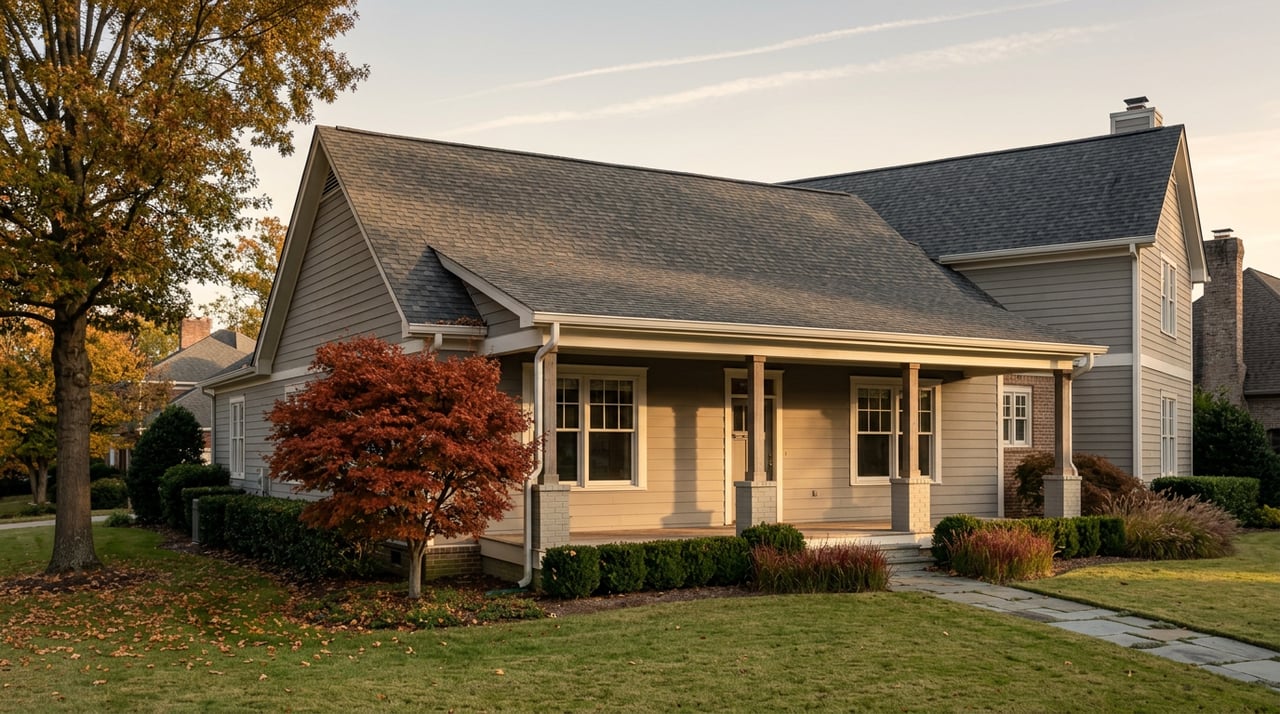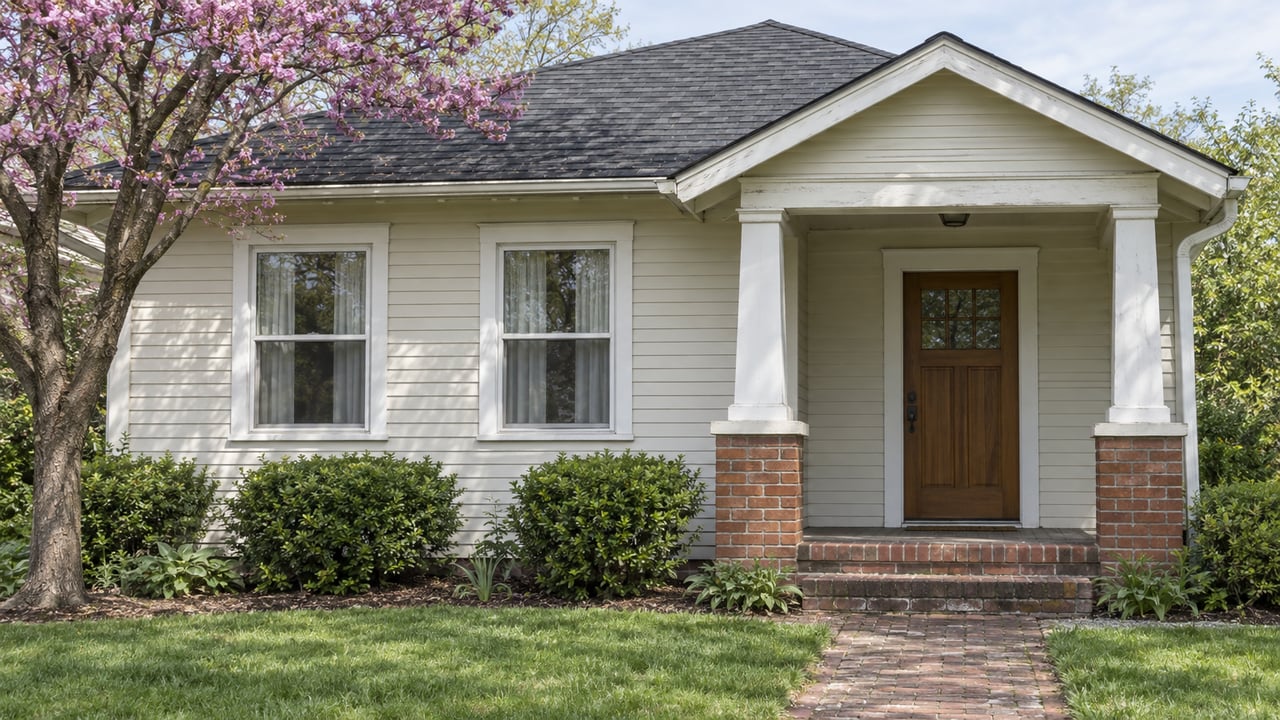
Why would two Bellevue Foursquares, listed three blocks apart at nearly identical prices, cost different amounts to actually own once they close? The answer usually shows up after the offer is accepted, when an insurance underwriter opens the file and starts asking questions the listing photos never answered: what's behind the plaster, how old is the roof, whether the panel in the basement tells the whole story about what's still running through the walls above it.
For most of the past decade, that question was a formality. In 2026, in Virginia, it isn't.
The Price Everyone Quotes, and the One Nobody Mentions
Bellevue's homes for sale currently sit in the mid-$500,000s, according to a local neighborhood overview, putting the neighborhood above nearby Laburnum Park and Ginter Park. Smaller homes under 2,000 square feet run from the upper $300,000s to the lower $600,000s, while larger or renovated properties reach into the upper $800,000s. Other neighborhood guides that lump Bellevue into a broader Northside category post lower figures, closer to $285,000 to $320,000, which says less about Bellevue specifically and more about how loosely "Northside" gets drawn from one source to the next.
Either number tells you what a buyer will pay to close. Neither tells you what a buyer will pay to insure what they just bought, and in a housing stock built almost entirely before 1950, that second number can move the math more than a few thousand dollars in either direction on price.
Why 2026 Is a Worse Year Than Usual to Ask
Homeowners insurance has climbed nationally for five straight years. Insurify's 2026 pricing report projects the average annual premium will reach roughly $3,057, a 4 percent increase after a 12 percent jump in 2025 alone, putting premiums up 46 percent since 2021.
Virginia isn't riding out that trend quietly. A recent analysis of 2026 homeowners insurance rates put the state's year-over-year increase at 37 percent, the third-steepest jump in the country behind only Louisiana and Michigan.
Zoom into Richmond and the range gets wide enough to matter for a single buyer comparing two houses. One review of Richmond-area rates lists an average annual premium around $1,015. A separate insurance calculator puts the Richmond average closer to $181 a month, or about $2,172 a year, roughly 19 percent below the statewide average. Both can be true at once, because they're drawing from different homes, different carriers, and different coverage levels. That spread is itself the point: on paper, a buyer sees one purchase price. In practice, they're shopping into a market where the same house can generate wildly different quotes depending on what an underwriter finds when they look past the front door.
What an Underwriter Sees When They Look at a 1920s Foursquare
Bellevue's housing stock is not incidental to this conversation. It is the conversation. The neighborhood is mostly older homes, built roughly from the 1920s to the 1940s. Dutch Colonials, Tudor Revivals, and American Foursquares anchor the streetscape, alongside smaller bungalows, Cape Cods, and Minimal Traditional houses.
That architecture is exactly what triggers a second look from underwriting. Homes from this era were commonly wired with knob-and-tube, a system that ran current through ceramic knobs and tubes with no grounding wire and no built-in way to shed excess heat if a circuit overloads. Richmond-based electrical contractor Smartwire puts it plainly: many carriers now restrict, surcharge, or decline coverage on homes with active knob-and-tube, and some require it replaced within a set window after closing. The insurance market, not the local building code, is often what actually sets the timeline.
That distinction matters because knob-and-tube isn't illegal in Virginia. The state's building code currently references the 2020 National Electrical Code, and the general rule is that a wiring installation legal when it went in can stay in service as long as it's maintained in safe condition. An insurer doesn't have to follow that same logic, and increasingly, it doesn't.
Roof age draws similar scrutiny. Coverage for a roof over 20 years old is often limited to actual cash value rather than full replacement cost, meaning a claim pays out what the worn roof was worth, not what a new one costs. Older plumbing adds a third layer: galvanized steel pipes, common in homes of this vintage, tend to rust internally in ways that restrict water flow and eventually cause damage, which most insurers factor into pricing as well.
None of this means coverage is unreachable. Chubb, for instance, reportedly offers some of the more affordable rates for older homes, averaging around $1,160 a year. But "affordable and available" is a different sentence than "included in the sale price," and it's a sentence a buyer typically doesn't hear until they're deep into financing.
What a Table Can Show That a Listing Sheet Can't
| Underwriting flag | Common in Bellevue's older stock | Why it moves a quote |
|---|---|---|
| Wiring type | Knob-and-tube, unpermitted splices added over decades | No grounding wire; some carriers surcharge, restrict, or decline outright |
| Roof age | Original or older replacement roofs | Roofs over 20 years often covered at actual cash value, not replacement cost |
| Plumbing material | Galvanized steel pipe | Internal rust restricts flow and raises long-term claim risk |
| Panel and permits | Newer panel added without full rewire | Can create a false sense that the whole system was brought to code |
That last row is where buyers get caught most often. A newer breaker panel in the basement looks like reassurance. It can mean nothing more than that the panel was swapped while the knob-and-tube upstairs was left in place and simply tied into the new circuits, a pattern electricians who work on Richmond's older housing stock report seeing regularly.
The Cost That Shows Up After the Offer, Not During the Walkthrough
If a rewire becomes the condition for coverage, the number is not small. A full knob-and-tube replacement typically runs from $12,000 to $36,600 depending on the size of the home, and that range doesn't include drywall repair, since walls generally have to be opened to pull the old wiring and are almost never left untouched during the process.
There's a second wrinkle specific to older homes trying to modernize. The National Electrical Code prohibits knob-and-tube wiring from being buried in loose, rolled, or foamed-in-place insulation, because trapped heat degrades the old insulation faster. That's relevant for anyone planning to insulate a Bellevue attic as an energy upgrade, a common project in a neighborhood this age. Insulate first and discover the wiring problem later, and a buyer has created their own underwriting headache after closing rather than before it.
A Practical Way to Price This Before Writing an Offer
A buyer comparing two similarly priced Bellevue homes can shrink most of this uncertainty before it becomes a post-closing surprise.
- Ask the seller for any electrical permit history alongside the standard disclosure, not just a verbal assurance that "it's been updated."
- Have a licensed electrician assess the wiring during the inspection period, not after the loan is already underwritten.
- Request a preliminary insurance quote during due diligence rather than waiting until the week before closing, since a decline or a rewire condition can still affect negotiating room at that stage.
- Treat the rewire range, $12,000 to $36,600, as a number to discuss with the seller if the assessment turns up active knob-and-tube, rather than a cost to absorb silently after the fact.
None of this changes what Bellevue is worth. A mid-$500,000s Foursquare with restored wiring and a newer roof is a different financial proposition than one with original 1930s wiring and a 25-year-old roof, even if both are listed at the same number this fall. The difference just doesn't show up until someone asks the right question at the right point in the transaction.
If you're comparing a specific Bellevue address against what it will actually cost to insure and own, not just what it costs to close, that's a conversation worth having before you write an offer, not after. Option 1 Realty can walk through what a given property's age and systems are likely to mean for underwriting, so the number you plan around is the real one.